English| EUR
Suggested for you
More currencies
Choose a language
Costa Adeje sits at sea level; the caldera floor of Teide National Park sits above 2,000 metres. Everything about the journey — the gradient, the temperature drop, the parking pressure — follows from that single fact. This how to get to mount teide from costa adeje guide explains the routes, the conditions and the timing that shape the trip.
Quick answer
From Costa Adeje the drive climbs to Teide National Park via the TF-51 through Arona and the TF-21 past Vilaflor, roughly 50 km of continuous ascent taking around an hour and fifteen minutes. Entry to the national park is free at 0 EUR; the cable car and summit permits carry separate fees. Aim to arrive between 09:00 and 11:00.
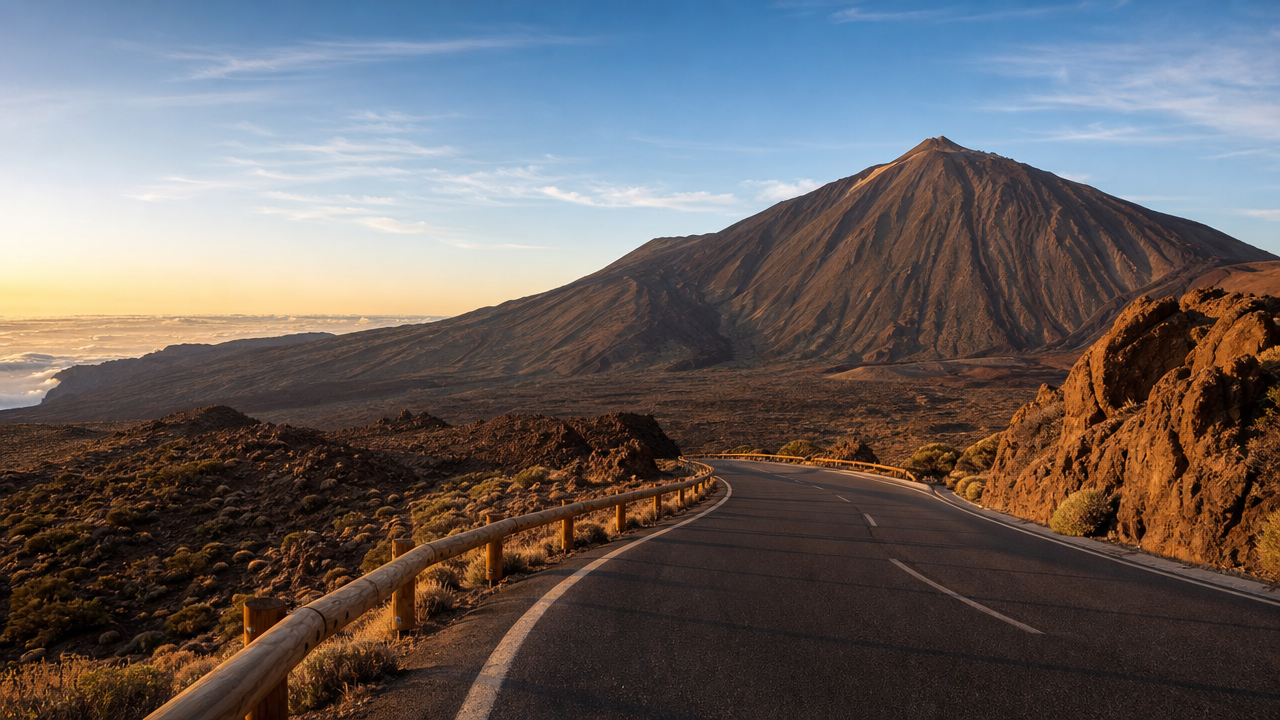
Teide is the third-tallest volcanic structure on Earth measured from its base on the ocean floor, and the road from the southern resorts climbs more of it in an hour than most drivers manage in a day. Costa Adeje begins at sea level. The Las Cañadas caldera, the vast collapsed crater floor the park road crosses, sits at roughly 2,100 metres. Between the two lie banana terraces, then pine forest, then a treeless landscape of lava flows and obsidian. The question of how to get to mount teide from costa adeje is really a question about altitude: what changes as the numbers rise, and what to carry with you when they do. The practical geography is straightforward. Two inland corridors serve the southwest — one rising through Arona and Vilaflor, one swinging east through Granadilla — and both converge on the TF-21 before entering the park boundary. Vilaflor, at around 1,400 metres, is the highest village in Spain and the last reliable place for fuel, coffee and a toilet stop. Beyond it the pines thin out. Ears pop. The temperature falls by something close to ten degrees against the coast, which surprises visitors who set off in beachwear. Cloud often forms a solid white deck below the road, an inversion layer locals call the mar de nubes, and drivers emerge above it into hard sunlight. The park itself asks nothing at the gate. What it does ask is timing and preparation. Parking bays at Roques de García and the cable car base station fill quickly, and the mountain generates its own weather; afternoons bring haze, wind and, in winter, road closures for snow. Anyone intending to stand on the crater rim needs a permit arranged in advance, which is a separate matter from riding the teleférico. Sunscreen matters more at 2,300 metres than at the marina. Most visitors arrive by hire car, but organised transfers, coach excursions and quad tours from the southern resorts all cover the same climb without the mountain driving. That choice — self-drive against guided — usually decides the rest of the day. Read the route details below, then work backwards from the recommended arrival window when planning how to get to mount teide from costa adeje, and the logistics fall into place.
“The question is really about altitude: what changes as the numbers rise, and what to carry with you when they do.”
Mount Teide is located in the center of Tenerife, accessible from Costa Adeje via well-maintained mountain roads. Driving or joining a guided excursion are the most common methods for reaching the national park.
TF-21 via Vilaflor
Titsa Line 342
Direct transfer
Not applicable
Arrive between 09:00 and 11:00 to avoid mid-day crowds and ensure parking availability within the national park.
The best arrival window for visiting Mount Teide from Costa Adeje is 09:00–11:00. Arriving during this period allows you to bypass the heaviest mid-day crowds and ensures better availability for parking at the trailheads and facilities.
—
Visiting on weekdays reduces human traffic significantly. Arriving early provides the best opportunity for uncrowded exploration.
Mild temperatures (10°C–20°C)
Spring offers stable weather and clear skies before the heat of summer. It is an ideal time for those who prefer comfortable hiking conditions.
Pleasant temperatures (12°C–22°C)
Autumn provides cooler, consistent weather as the summer peak fades. This season remains a favorable choice for visitors traveling from the coast.
Verdict: The concrete best slot is arriving Tuesday to Thursday between 09:00–11:00 during the months of April or October.
Mount Teide maintains consistent daily operating hours throughout the week to assist with your travel planning from Costa Adeje.
Access to Mount Teide National Park is free, though specific activities such as using the cable car or accessing the summit require separate fees and permits.
Verdict: A typical visitor pays 0 EUR for park entry, with final costs depending entirely on whether they choose to purchase cable car tickets or secure a summit permit.
The drive up from Costa Adeje climbs past 2,000 m, so a few tasks handled in advance make the difference between a smooth day and a wasted one.
Everything you need to know about how to get to mount teide from costa adeje
Driving remains the most flexible way for those researching how to get to mount teide from costa adeje, typically taking about 60 to 90 minutes via the TF-21 road. You will wind through scenic volcanic landscapes, passing through Vilaflor on your ascent.
Public bus routes exist, though they often require transfers and have limited schedules compared to private transport. Many visitors opting for this route find that group transfers are a more convenient alternative for reaching this Tenerife landmark.
To avoid peak mid-day crowds and ensure parking availability, plan your arrival between 09:00 and 11:00. This timing allows for a more relaxed exploration of the volcanic terrain and caldera trails.
There is 0 EUR entrance fee for the National Park itself. Please note that the cable car and specific summit permits have separate fees, which are managed independently of park access.
Yes, joining a Teide quad tour or a professional excursion is a popular method for those unsure how to get to mount teide from costa adeje. These services manage the logistics and transport, allowing you to focus on the terrain and the altitude.
Accessing the peak requires a specific, limited permit managed by the park authorities. We recommend checking the official site for availability well in advance of your trip to secure your spot.
The roads are well-maintained and clearly signposted, making the ascent manageable for most drivers. Simply follow the road signs toward the national park and enjoy the change in vegetation as you climb higher.
Mount Teide Quad Tours
Read more Tickets & toursTeide Quad Bike Rentals
Read more Tickets & toursTenerife Quad Tour Teide
Read more Tickets & toursTeide National Park Quad Tours
Read more Tickets & toursMonster Quad Teide Tours
Read more GuideCan You Hire Quads in Tenerife?
Read more Tickets & toursSunset Quad Tours
Read more Tickets & toursTeide ATV Tours
Read more